Overview
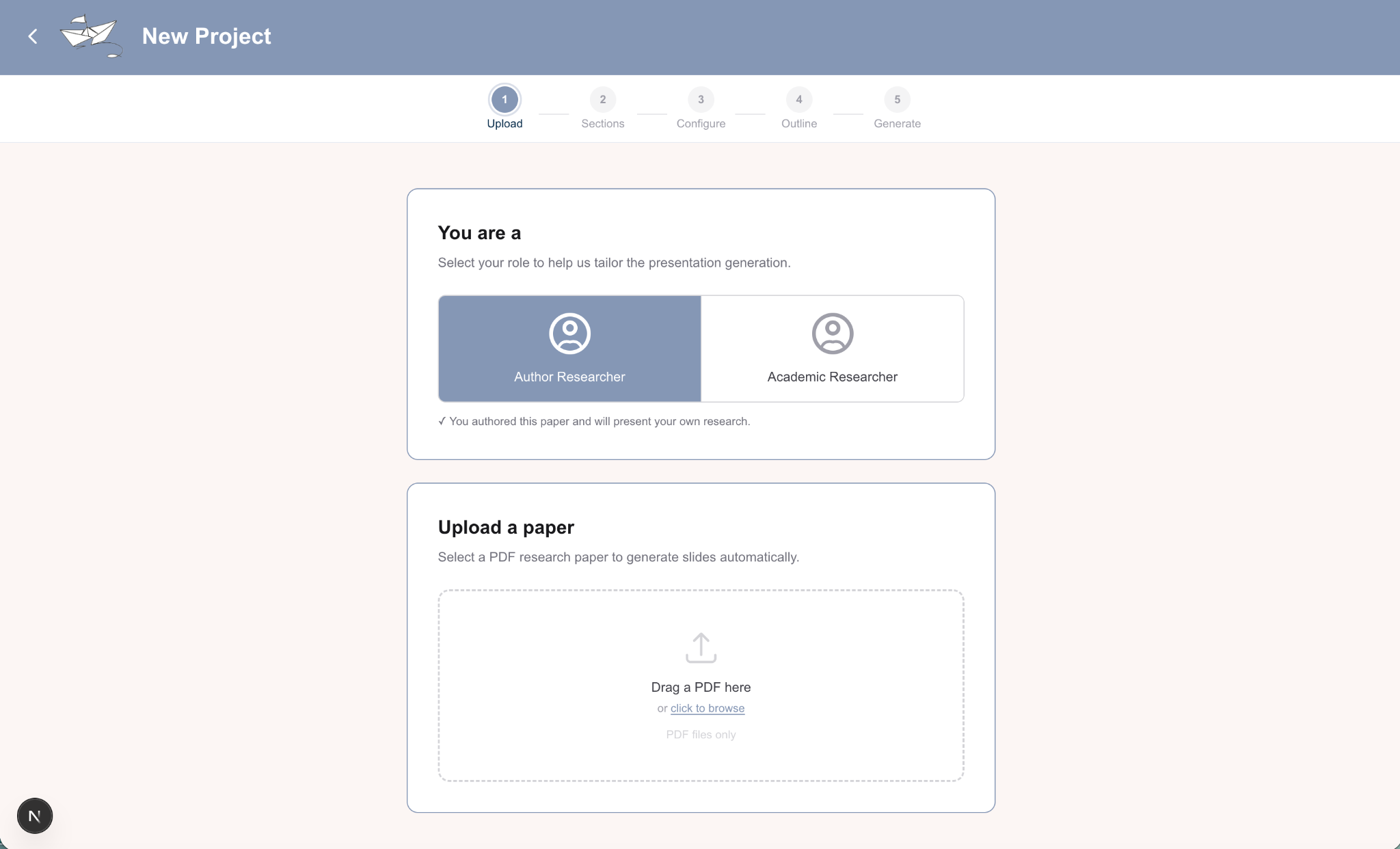
Paperflow is an LLM-assisted workspace that helps researchers transform dense academic papers into structured presentation flows. Users upload a PDF and specify constraints like audience level and presentation length — Paperflow generates a timeline-based outline with aligned talking points and speaker notes.
By combining automated content extraction with interactive editing tools, the system supports rapid presentation preparation while keeping users in control of the final narrative.
Features
PDF structure extraction
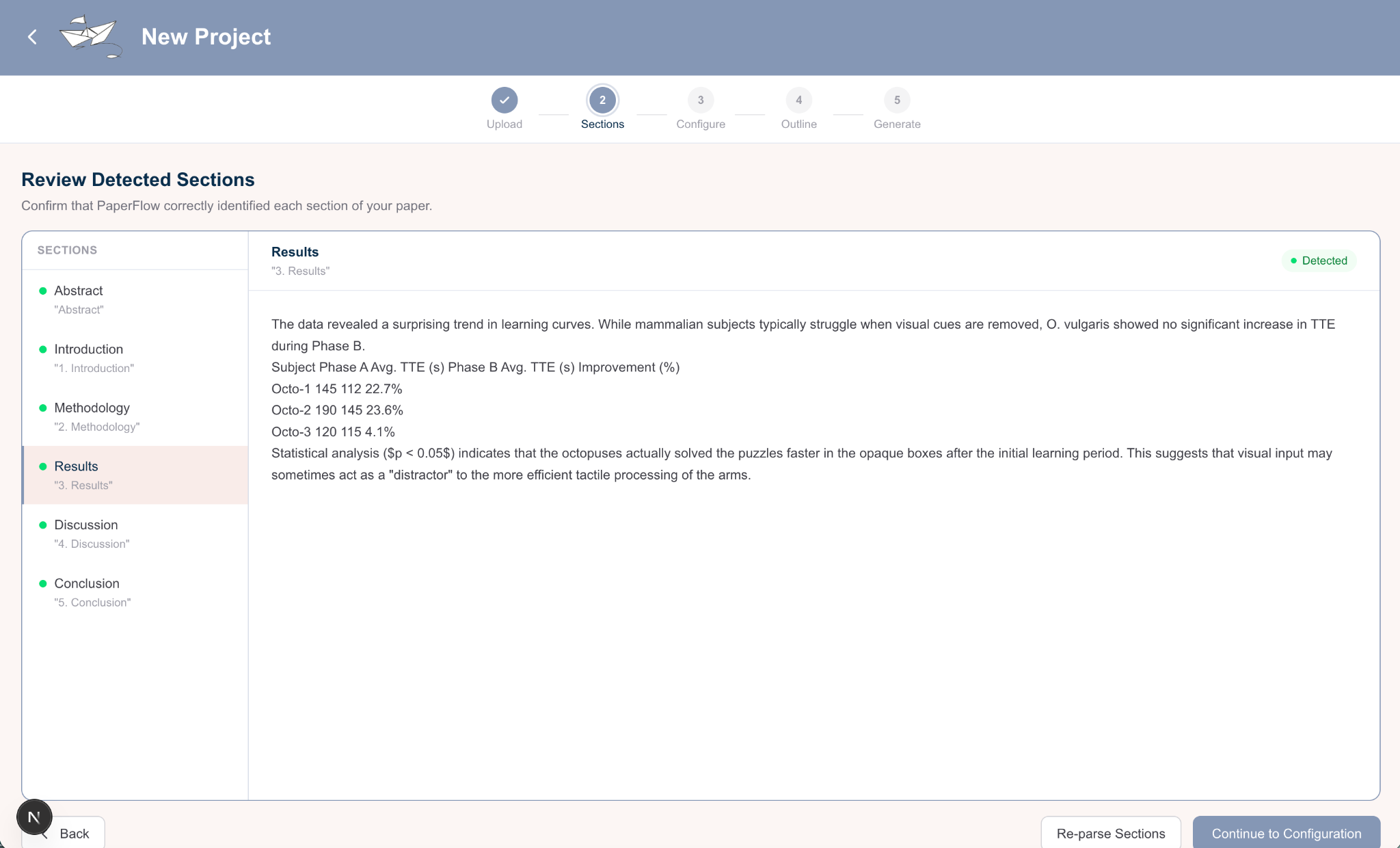
PDFPlumber parses uploaded academic papers into labeled sections, preserving the document's logical structure as a foundation for the generation pipeline rather than treating the paper as a flat text blob.
Structured outline generation
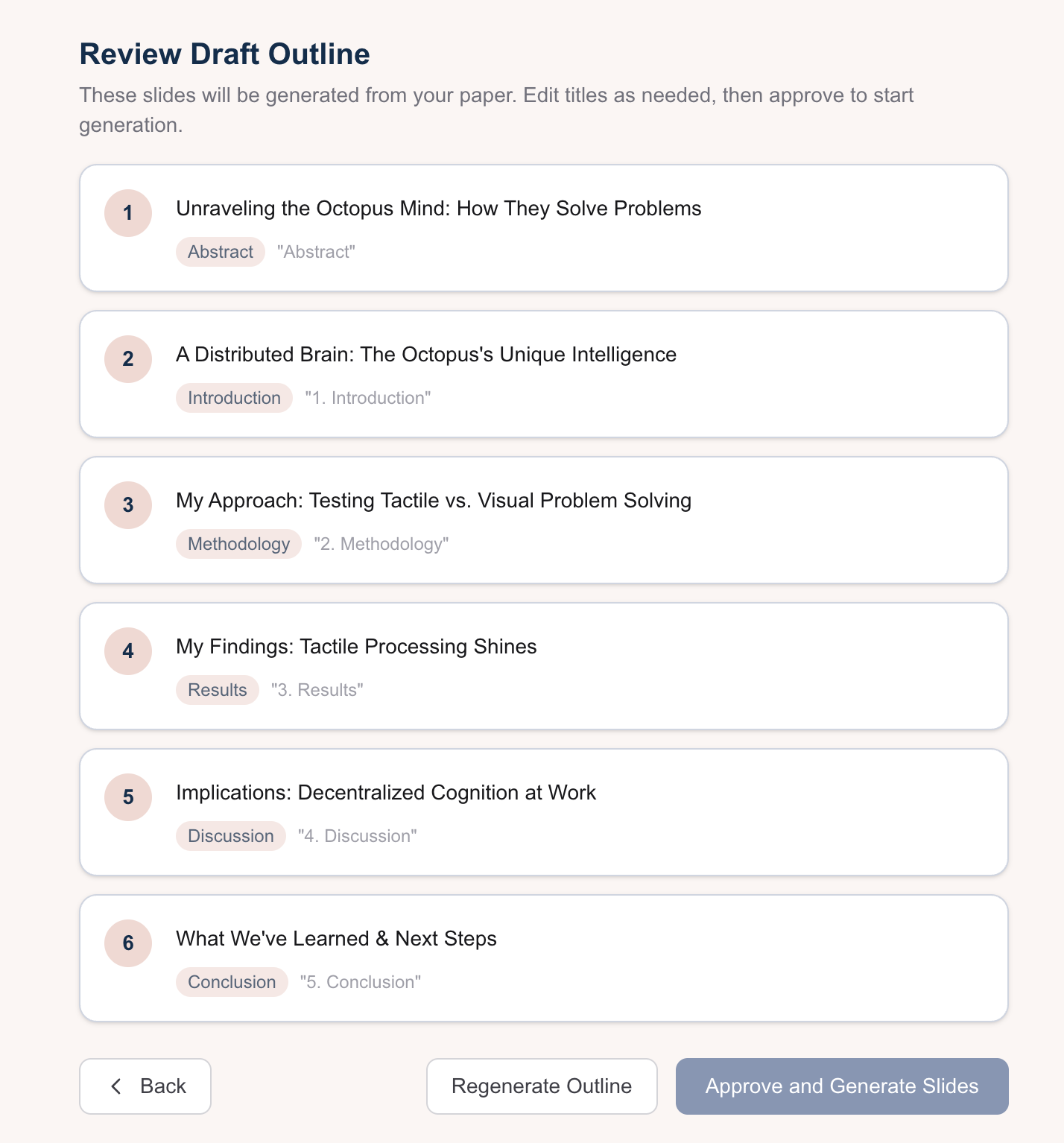
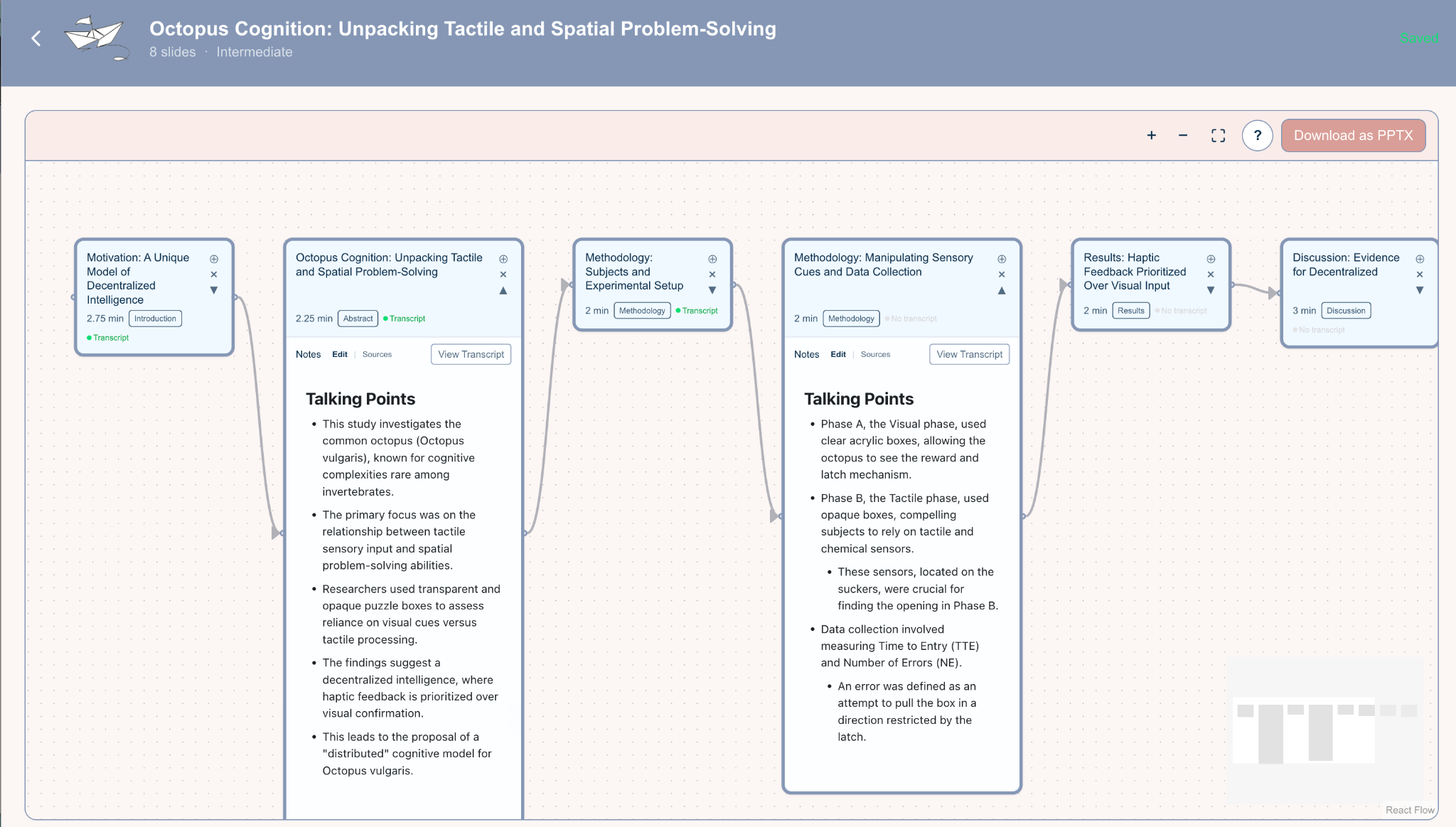
Gemini generates candidate presentation structure — slide titles, timing estimates, and section priorities — which users review and refine before committing to transcript generation. This staged checkpoint reduces downstream correction effort.
Editable timeline interface
The presentation flow is represented as editable timeline nodes that can be reordered, expanded, or annotated with Markdown — enabling spatial reasoning about structure without losing access to the underlying source content.
Source-linked citations
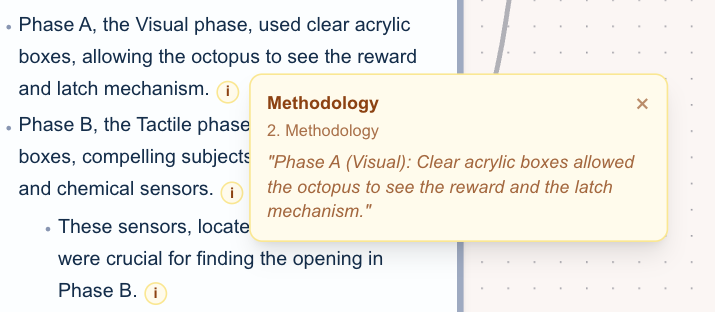
Each generated talking point carries a link back to the source passage in the original paper, keeping the generation transparent and verifiable throughout the editing process.
Technologies
Workflow Overview
Reflections
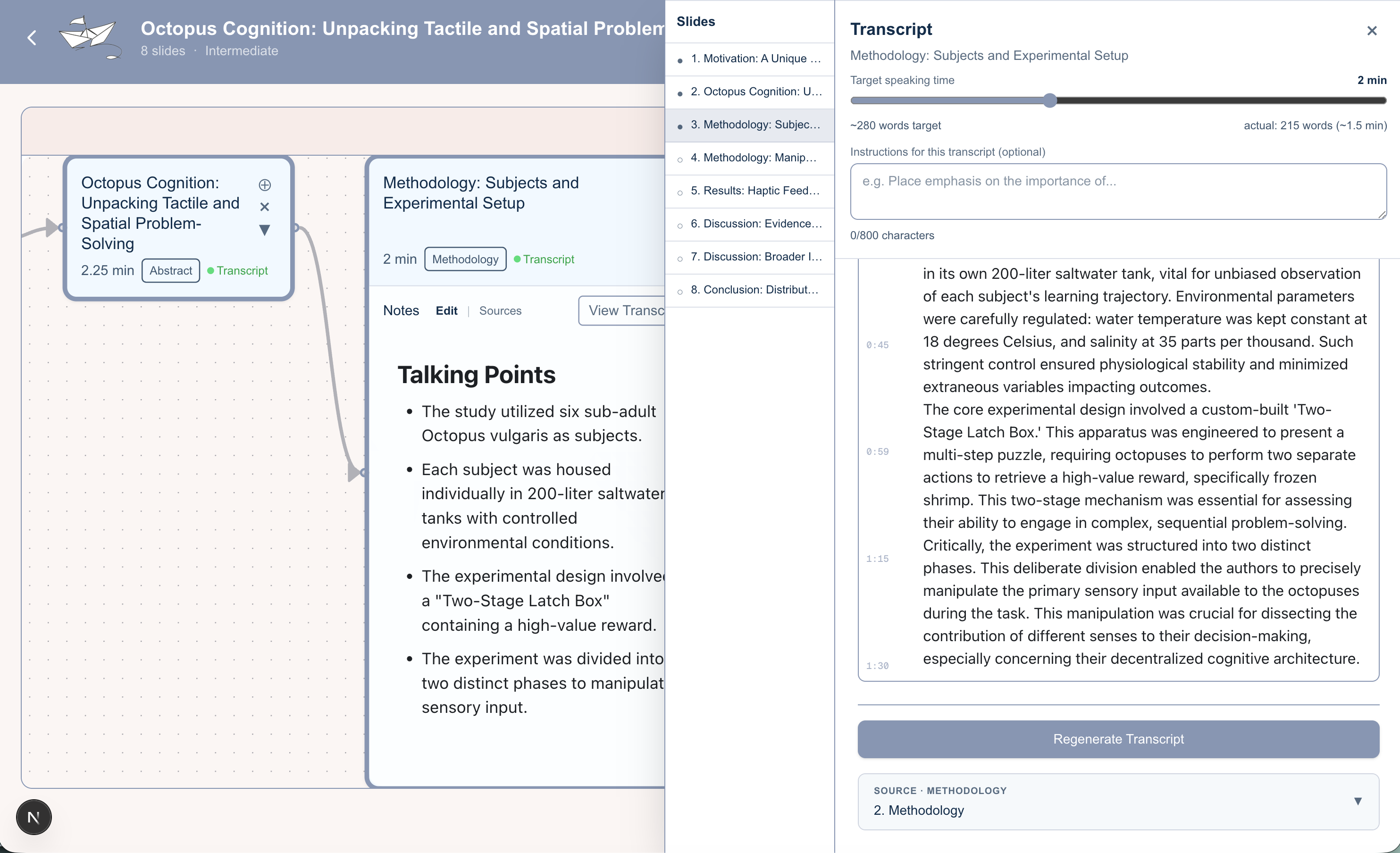
A key lesson was the value of staged interaction checkpoints in AI-assisted workflows. Instead of producing a fixed output automatically, Paperflow introduces structured review moments — parsed sections, outline approval, timing constraints, transcript regeneration — where users can verify and adjust before committing.
This staged model improved the perceived reliability of the generated output: when users understood what the system did at each step, they were more likely to trust the final result and less likely to need extensive correction afterward. The tradeoff is a longer workflow, but for research presentation preparation, thoroughness is usually worth the added steps.